
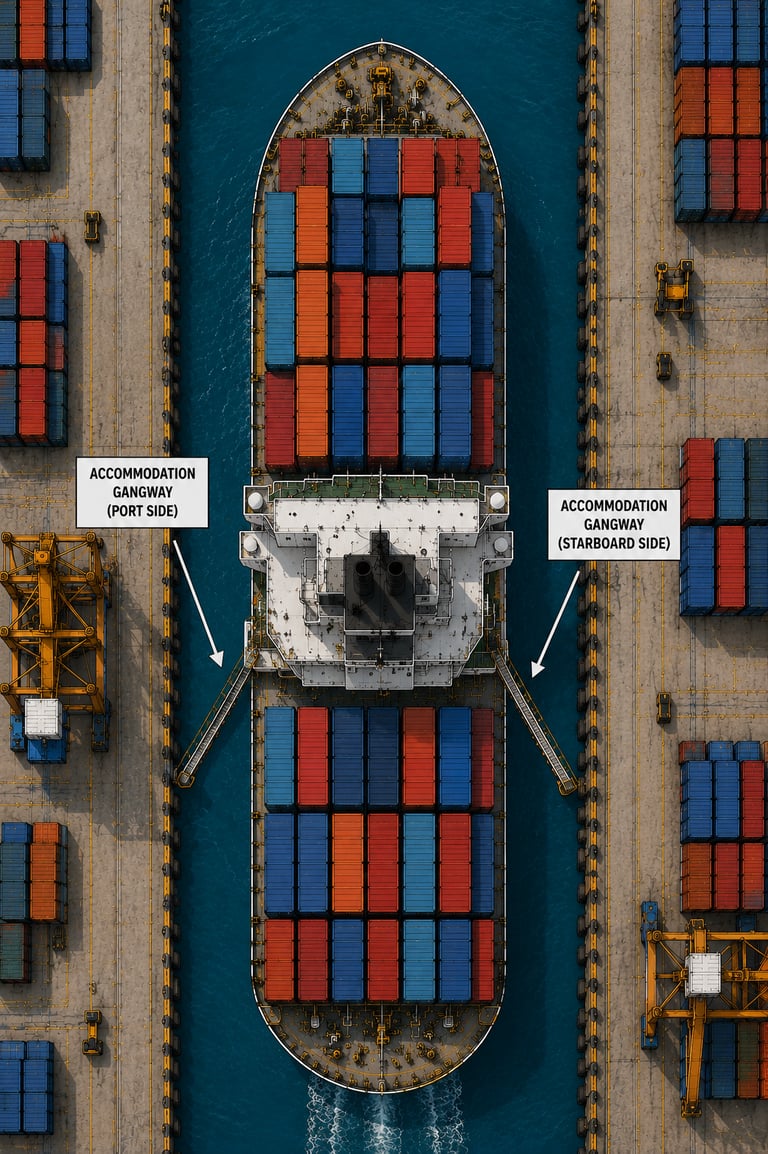
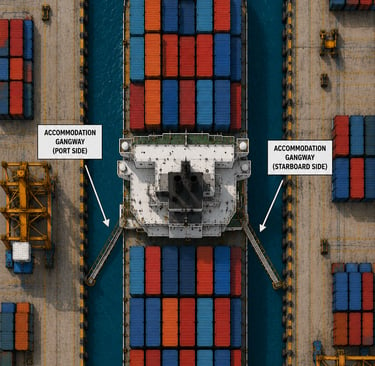
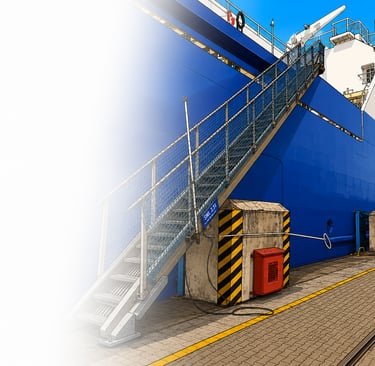
On a container ship, Both fixed and telescoping gangways can be used and rarely mobile gangways. The accommodation gangway (or accommodation ladder) is typically located on the upper deck, immediately adjacent to or slightly aft of the ship’s superstructure. Although this can change due to the length of the vassal.
When deployed, the gangway points toward the stern (aft) of the vessel.
Key Details
Location:
The accommodation ladder is permanently mounted on both the port and starboard sides of the main deck. When not in use, it is normally stored flush against the ship’s hull.Direction:
Under international SOLAS (Safety of Life at Sea) regulations, accommodation ladders must lead aft. This arrangement helps prevent a pilot boat or tender from being forced underneath the ladder by the ship’s forward motion while alongside.Amount of Gangways:
Typically they have 2, one on the starboard and other on the Portside. But some can have up to 4 on a ship depending on the length and company standards.
Setup Variations:
The ladder may:be lowered directly onto the dock,
be suspended slightly above the dock with a short “brow” gangway connecting it to the pier, or
be used together with a vertical pilot ladder when the vessel’s freeboard is exceptionally high.
Other Info:

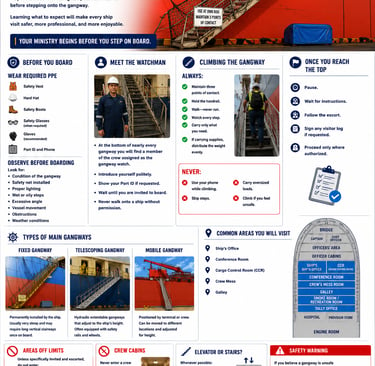
GANGWAYS
WHAT EVERY PORT CHAPLAIN SHOULD EXPECT
Every ship presents a different boarding experience.
Ganways vary in height, angle, construction,and safety features depending on the vessel, cargo, tide, and terminal.
As a port Chaplain, one of your first responsibilities is to recognize potential hazards before stepping onto the gangway.
Learning what to expect will make every ship visit safer, more professional, and more enjoyable.
YOUR MINISTRY BEGINS BEFORE YOU STEP ON BOARD









BEFORE YOU BOARD
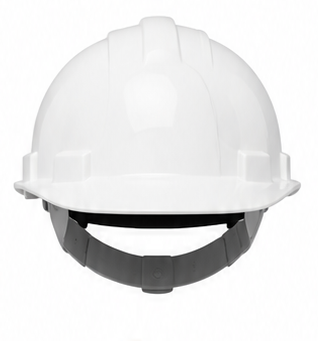
WEAR REQUIRED PPE
OBSERVE BEFORE BOARDING
Look for:
Condition of the gangway
Safety net installed
Proper lighting
Wet or oily steps
Excessive angle
Vessel movement
Obstructions
Weather conditions
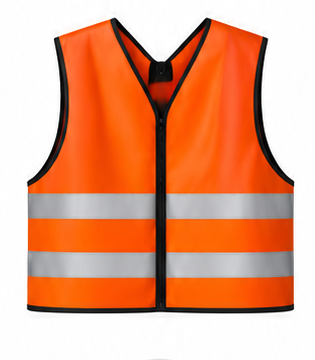
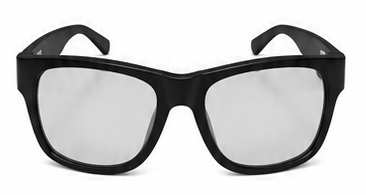

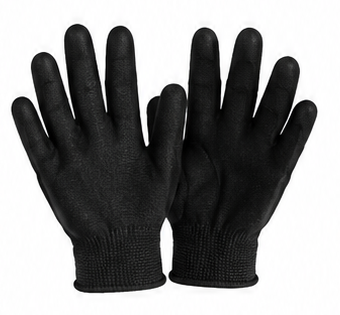
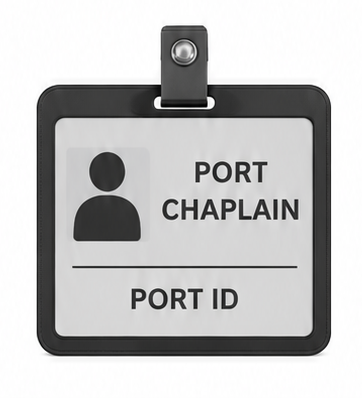
Safety vest
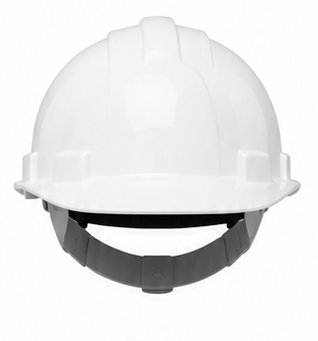
Hard Hat
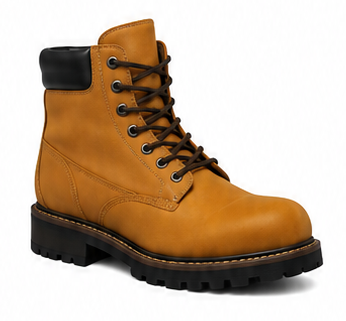
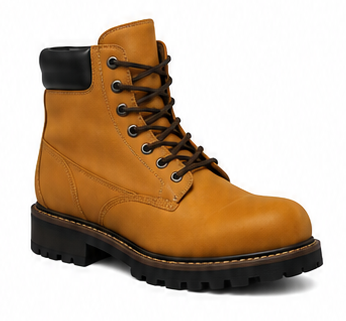
Safety Boots
Safety Glasses
Gloves
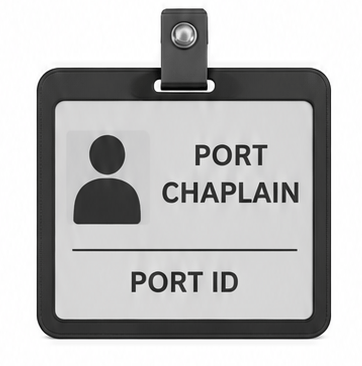
Port ID & Phone
MEET THE WATCHMAN
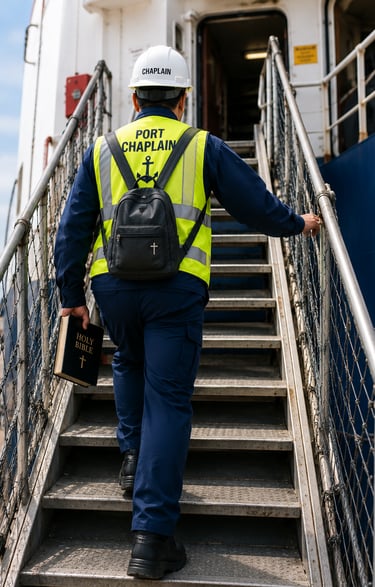
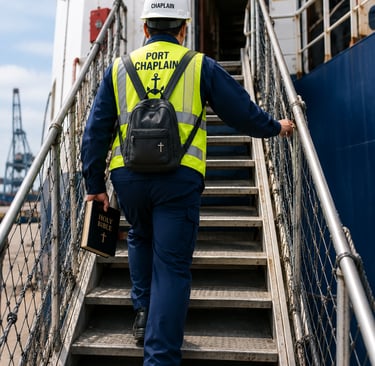
CLIMBING THE GANGWAY
ONCE YOU REACH THE TOP


Maintain three points of contact.
Hold the handrail.
Walk - never run.
Watch every step
Carry only what you need.
Wear gloves.
ALWAYS:


NEVER:
Use your phone while climbing
At the top of every gangway you will find a member of the crew assigned as the gangway watch.
Introduce yourself politely.
Show your Port ID
Sign the log in if needed
Wait until you are invited to board.
Never walk onto a ship without permission.
Skip Steps
Carry oversized loads
Climb if you feel unsafe
If carrying supplies, distribute the weight evenly.
Pause.
Wait for instructions
Sign in Visitor log
Follow the escort
Proceed only where authorized


